
For centuries, the name Dajjal in Islam has filled people with fear, mystery, and endless questions. Many believe that the arrival of Dajjal is one of the greatest signs of the end times, a dark period described in Islamic prophecy where truth and deception become difficult to separate.
Stories about Dajjal are not just old legends passed through generations.
Millions of people today search for the truth about Dajjal, trying to understand who he is, what signs will appear before him, and why scholars continue to warn humanity about his fitnah.
The topic has become one of the most searched end-time mysteries because it touches deep human fears about chaos, manipulation, false miracles, and the battle between truth and deception.
Some believe the signs of Dajjal in Islam are already appearing in the modern world, while others search ancient Islamic texts for hidden clues about the coming trials.
There are lot of queries about Dajjal and question rise on internet
- Who is Dajjal?
- What are the signs of Dajjal?
- Is Dajjal alive today?
- How to protect yourself from Dajjal?
Continue to trend across search engines and social media. This all make sense and rise question against the systems.
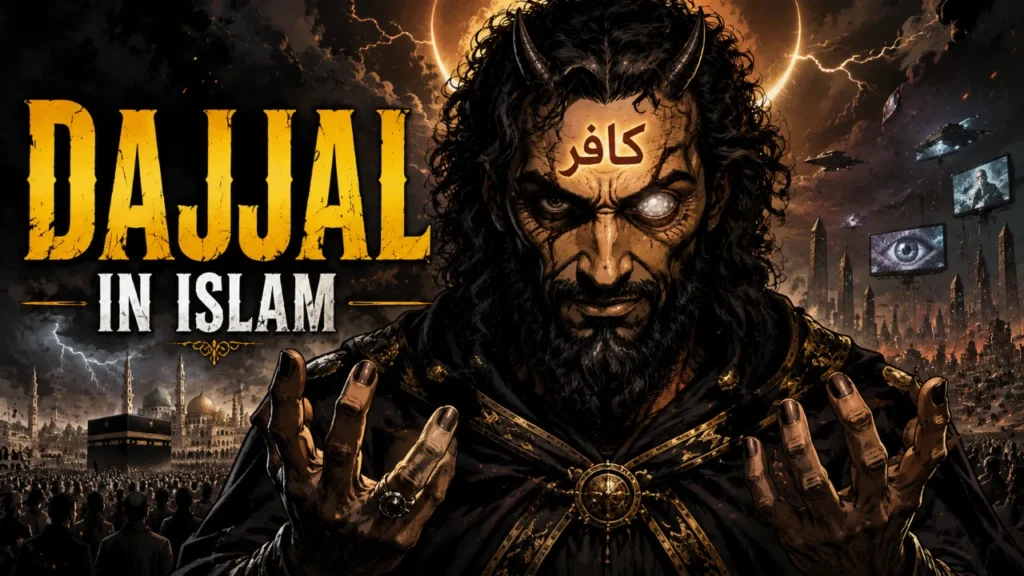
The mystery grows stronger because no other end-time figure in Islamic eschatology carries such terrifying descriptions and warnings.
From strange predictions to frightening prophecies, the story of Dajjal continues to capture the attention of believers and researchers around the world.
As confusion spreads across society and people search for spiritual guidance, understanding the reality of Dajjal has become more important than ever.
This hidden truth behind Dajjal in Islam may reveal why so many people fear the final signs of the Day of Judgment and what humanity must prepare for before the last days arrive.
What Is Dajjal in Islam?
In Islam, Dajjal is known as a dangerous deceiver who will appear before the Day of Judgment. He is often called the “false messiah” because he will claim powers and mislead people with lies, miracles, and deception.
Islamic teachings describe Dajjal as one of the biggest signs of the end times and one of the greatest trials humanity will ever face.
The arrival of Dajjal is connected with chaos, confusion, and a worldwide test of faith that will affect millions of people.
The word “Dajjal” comes from the Arabic root word meaning “to deceive,” “to cover the truth,” or “to spread lies.” Because of this meaning, Dajjal is described as a master of deception who hides truth and makes falsehood appear real.
Many Islamic scholars explain that the name perfectly matches his role in the last days, where people will struggle to recognize truth from illusion.
Dajjal in Islam is often compared to the false messiah in other religious traditions.
According to Islamic prophecy, he will claim to be a savior and later even claim divinity.
He will perform strange acts and false miracles to gain followers. Many people will believe him because of fear, greed, confusion, and weak faith. Islamic teachings warn believers not to be deceived by appearances or supernatural displays connected to Dajjal.
In Islamic eschatology, which is the study of end-time events, Dajjal holds a central role. Prophet Muhammad warned his followers repeatedly about the fitnah, or trial, of Dajjal because it would be unlike any previous test in human history.
The story of Dajjal is closely connected with other major signs of the end times, including the return of Jesus, known in Islam as Isa, who is believed to defeat Dajjal in Islam before the final Day of Judgment.
Physical appearance of Dajjal in Islam
Islamic teachings describe Dajjal as a dangerous deceiver who will appear before the Day of Judgment. Prophet Muhammad warned believers about physical signs of Dajjal in Islam so people could recognize him during the end times.
One of the biggest signs of Dajjal is that he will have one damaged eye.
Hadith describe it as blind, swollen, or looking like a floating grape. This is important because Dajjal in Islam will falsely claim great power, but his physical defect will show that he is only a human being.
Another famous sign is the word “Kafir,” meaning disbeliever, written on his forehead.
Islamic teachings say true believers will recognize this mark even if they cannot read. It will expose the truth behind his deception.
According to Hadith, Dajjal will have curly hair, a strong body, and a reddish appearance. He will travel quickly across the world and attract huge crowds.
Many people will follow him because of fear, confusion, and the difficult conditions of the last days.
Dajjal is also believed to have supernatural abilities that will test human faith. Islamic traditions say he will perform false miracles, control resources, and create powerful illusions to deceive people.
Some will think he has divine powers because he may appear to bring wealth, food, and comfort to his followers.
In Islamic eschatology, Dajjal in Islam is considered one of the greatest end-time trials. His arrival is seen as a major sign before the return of Jesus, known in Islam as Isa, who is believed to defeat him before the Day of Judgment.
Signs That Dajjal Is Near
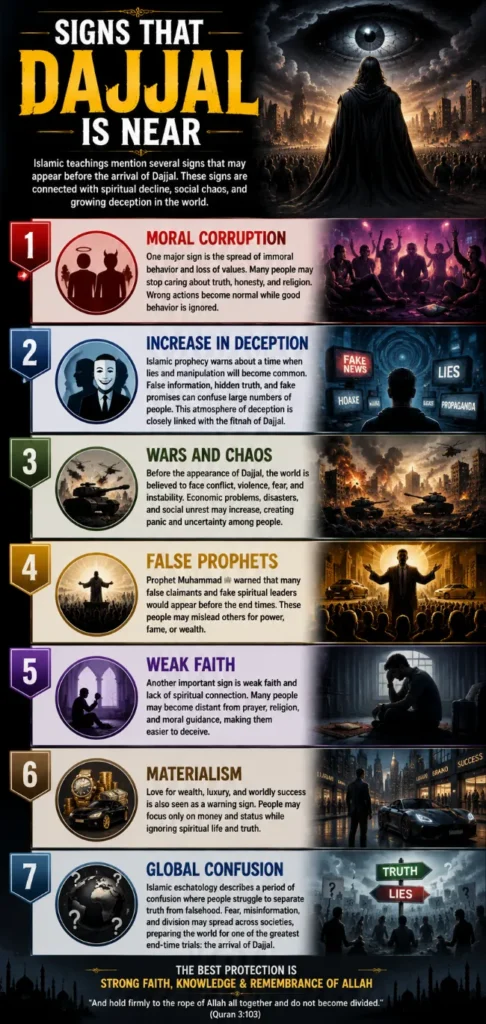
Islamic teachings mention several signs that may appear before the arrival of Dajjal. These signs are connected with spiritual decline, social chaos, and growing deception in the world.

1. Moral Corruption: One major sign is the spread of immoral behavior and loss of values.
Many people may stop caring about truth, honesty, and religion. Wrong actions become normal while good behavior is ignored.
2. Increase in Deception: Islamic prophecy warns about a time when lies and manipulation will become common. False information, hidden truth, and fake promises can confuse large numbers of people.
This atmosphere of deception is closely linked with the fitnah of Dajjal.
3. Wars and Chaos: Before the appearance of Dajjal, the world is believed to face conflict, violence, fear, and instability.
Economic problems, disasters, and social unrest may increase, creating panic and uncertainty among people.
4. False Prophets: Prophet Muhammad warned that many false claimants and fake spiritual leaders would appear before the end times.
These people may mislead others for power, fame, or wealth.
5. Weak Faith: Another important sign is weak faith and lack of spiritual connection.
Many people may become distant from prayer, religion, and moral guidance, making them easier to deceive.
6. Materialism: Love for wealth, luxury, and worldly success is also seen as a warning sign.
People may focus only on money and status while ignoring spiritual life and truth.
7. Global Confusion: Islamic eschatology describes a period of confusion where people struggle to separate truth from falsehood.
Fear, misinformation, and division may spread across societies, preparing the world for one of the greatest end-time trials: the arrival of Dajjal.
Read : Clairaudience Psychic Ability: Hear Messages from Angels and Spirit Guides 7 Powerful signs
How Will Dajjal Deceive People?
Islamic teachings describe Dajjal as a master deceiver who will mislead people through fear, false miracles, and manipulation. His goal will be to make people believe in him and turn away from the truth.
According to Hadith, Dajjal in Islam will perform shocking acts that appear supernatural. Many people will think he has divine powers because of the strange events connected to him.
These miracles are described as a major test of faith during the end times. Islamic prophecy says Dajjal will control resources like food, water, and wealth.
Areas that follow him may receive comfort and prosperity, while those who reject him could face hardship and hunger. Because of this, many people may support him out of fear or desperation.

Dajjal will spread fear and confusion across the world. During a time of chaos and instability, people may feel hopeless and emotionally weak.
He will use this fear to influence large crowds and gain power over society.
One of the biggest deceptions of Dajjal is that he will eventually claim to be divine. Despite his human flaws, many people will believe him because of his influence and false miracles.
Prophet Muhammad warned believers to stay strong in faith and avoid falling into the fitnah of Dajjal in Islam.
In Islamic eschatology, the trial of Dajjal is considered one of the greatest tests humanity will ever face before the return of Jesus, known in Islam as Isa.
Where Will Dajjal Appear?
Islamic traditions describe the appearance of Dajjal as one of the major end-time events. Many Hadith mention the regions connected to his arrival and the places he will travel during his worldwide deception.
Some Islamic narrations suggest that Dajjal will emerge from the East, in a region connected to Khurasan, an ancient area linked with parts of modern-day Iran, Afghanistan, and Central Asia.
Other traditions mention that he may first appear during a time of global chaos and confusion when people are spiritually weak and searching for solutions.
According to Hadith, Dajjal in Islam will travel rapidly across the earth and spread his deception to many nations.
Islamic teachings describe him moving from place to place, gathering followers through fear, false miracles, and promises of wealth and security. His influence is believed to affect large parts of the world during the final days.
Despite his power, Islamic prophecy says Dajjal will not be able to enter the holy cities of Mecca and Medina.
These cities are believed to be protected by angels.
Many believers see this as a sign of divine protection during one of the greatest trials in Islamic eschatology.
Prophet Muhammad warned Muslims to stay firm in faith during the fitnah of Dajjal and remain connected to spiritual guidance before the Day of Judgment.
Read : How to Develop Psychic Abilities and discover your 5+ Powerful but natural gift from universe
Who Will Defeat Dajjal?
Islamic teachings say that Dajjal will eventually be defeated by Jesus, known in Islam as Isa. His return is considered one of the greatest signs of the end times and a moment of hope after a period of fear, deception, and global chaos.
According to Islamic belief, Isa will return to earth during the time when Dajjal in Islam is spreading corruption and misleading people.
Muslims believe that Isa was raised by Allah and will return before the Day of Judgment to restore truth and guide humanity. His arrival will strengthen the faith of believers and expose the false claims of Dajjal.
Islamic traditions describe a final confrontation between Isa and Dajjal.
After chasing him, Isa will defeat Dajjal and end his reign of deception. This event is seen as the victory of truth over falsehood and the end of one of the greatest trials in human history.
After Dajjal in Islam is defeated, Islamic prophecy says peace and justice will return to the world.
Oppression, fear, and corruption will decrease, and people will live with greater faith and unity. Prophet Muhammad described this period as a time when truth and righteousness would once again become strong before the final Day of Judgment.
How to Protect Yourself from Dajjal
Islamic teachings give several ways believers can protect themselves from the fitnah of Dajjal. Prophet Muhammad warned that the trial of Dajjal would be extremely powerful, so strong faith and spiritual awareness are important.
Reading Surah Al-Kahf
One of the most recommended protections is reading Quran Surah Al-Kahf. According to Hadith, reciting its verses can protect a believer from the deception of Dajjal. Many Muslims read it every Friday for spiritual guidance and protection.
Strengthening Faith
Strong belief in Allah and regular worship help protect the heart from confusion and falsehood. Prayer, patience, and trust in God make a person spiritually stronger during difficult times.
Avoiding Deception
Islamic teachings warn believers not to blindly follow rumors, fake miracles, or misleading leaders. Dajjal’s greatest weapon is deception, so people are encouraged to think carefully and stay connected to truth.
Prayer and Remembrance
Regular prayer, dua, and remembrance of Allah are considered powerful protections against fear and spiritual weakness. Asking Allah for safety from Dajjal is also recommended in Islamic tradition.
Authentic Islamic Knowledge
Learning authentic Islamic teachings helps believers recognize false ideas and avoid confusion. Studying the Quran and trusted Hadith gives guidance about the signs of the end times and the dangers connected with Dajjal in Islam.
Islamic eschatology teaches that faith, knowledge, and sincerity are the strongest defenses against one of the greatest trials before the Day of Judgment.
Modern Interpretations and Misconceptions
The topic of Dajjal has become very popular online, especially in videos, blogs, and social media discussions. While many people search for answers about end-time signs, it is important to separate authentic Islamic teachings from fear-based theories and misinformation.
Avoid Conspiracy Theories. Many internet claims connect Dajjal with random world events, technology, celebrities, or political figures without strong Islamic evidence. These theories often spread fear and confusion instead of real knowledge.
Islamic scholars advise Muslims to avoid sensational rumors and focus only on authentic teachings from the Quran and reliable Hadith.
Difference between Symbolism and Authentic Teachings. Some people interpret the story of Dajjal in Islam symbolically, while others take every description literally.
Islamic scholarship teaches that believers should follow balanced understanding based on trusted sources instead of personal guesses. Scholars explain that not every modern event is automatically a sign of Dajjal.
Internet Myths vs Islamic Scholarship. The internet contains many fake stories and exaggerated claims about Dajjal. Some videos and articles are created only to gain views and attention.
Authentic Islamic scholarship focuses on verified narrations and careful interpretation rather than fear-driven content. Prophet Muhammad encouraged believers to seek knowledge from trustworthy sources and avoid spreading false information.
Understanding Dajjal in Islam should increase awareness and faith, not panic or obsession.
Islam teaches believers to stay calm, strengthen their connection with Allah, and rely on authentic knowledge instead of online myths and conspiracy theories.
Read : 5 Rare and Powerful Empath Superpowers Have According to Emotional Psychology
Sign of Dajjal in Islam Conclusion
The story of Dajjal is one of the most serious and powerful warnings in Islamic teachings about the end times.
It reminds believers that deception, fear, and confusion can easily mislead people when faith becomes weak and truth is ignored.
Islamic traditions describe Dajjal not only as a major sign before the Day of Judgment, but also as a test of human belief, morality, and awareness.
Throughout history, people have searched for answers about Dajjal because the topic connects deeply with fear of deception, false promises, and spiritual corruption.
The lessons connected with Dajjal in Islam teach Muslims to stay close to the Quran, seek authentic knowledge, strengthen faith, and avoid blindly following rumors or misleading information.
In a world filled with manipulation, misinformation, and distractions, critical thinking and spiritual awareness are more important than ever.
Prophet Muhammad repeatedly warned believers to prepare themselves through prayer, knowledge, patience, and sincerity.
True protection from deception comes from strong faith and the ability to recognize truth even during difficult times.
As modern society faces growing confusion and endless information, one question continues to remain deeply relevant: Would humanity recognize deception if it appeared today?
FAQ
Q. 1 Is Dajjal real in Islam?
Yes. In Islamic belief, Dajjal is considered a real end-time figure known as the false messiah. His appearance is described in many authentic Hadith traditions and is considered one of the major signs before the Day of Judgment.
Q. 2 What are the first signs of Dajjal?
Islamic teachings mention several warning signs before Dajjal appears, including widespread deception, moral corruption, weak faith, false prophets, conflict, and increasing confusion in society.
Q. 3 Can Dajjal perform miracles?
According to Islamic traditions, Dajjal will appear to perform extraordinary acts that will deceive many people. These acts are described as trials and tests for humanity rather than true divine miracles.
Q. 4 Which cities can Dajjal not enter?
Islamic narrations state that Dajjal will not be able to enter the holy cities of Mecca and Medina because they will be protected by angels.
Q. 5 How long will Dajjal stay on Earth?
According to Hadith, Dajjal will remain on Earth for 40 days. However, these days will not be normal in length, with some described as extremely long compared to ordinary days.
Q. 6 Who kills Dajjal?
Islamic belief teaches that Isa (Jesus) will return near the end times and defeat Dajjal, bringing justice and peace after a period of great turmoil.
Q. 7 Is Dajjal mentioned in the Quran?
Dajjal is not mentioned directly by name in the Quran. Most information about him comes from authentic Hadith literature and Islamic scholarly explanations about end-time events.
Q. 8 How can Muslims protect themselves from Dajjal?
Islamic teachings recommend strengthening faith, seeking authentic knowledge, praying regularly, and reciting Surah Al-Kahf. Believers are also advised to avoid deception and remain firm in truth and morality.